Navigating Uncertainty: How an Intelligent Supply Chain Execution System Builds Resilience in Manufacturing
It is the 2:00 AM phone call that every manufacturing COO dreads. A critical sub-assembly component hasn't cleared inbound customs due to an unmapped logistics bottleneck, and the main production line has officially ground to a halt. As the hours tick by, the plant floor goes dead silent—but the financial hemorrhaging is deafening. **An unscheduled line shutdown costs an average of $260,000 per hour**, blasting holes straight through your quarterly margin targets. In the control room, supervisors are frantically digging through outdated spreadsheets and calling fallback vendors, trying to manually locate alternative capacity before the morning shift arrives.
This is the reality of chasing efficiency over structural resilience. For decades, manufacturers have optimized for lean, just-in-time logistics, leaving zero padding for system anomalies. When global trade friction, component scarcity, or supplier capacity drops manifest, disconnected legacy platforms leave planners completely blind until the line goes down. Reclaiming control requires moving past passive tracking dashboards and implementing an intelligent, event-driven data pipeline that treats manufacturing orchestration like an autonomous nervous system.
The Execution Pipeline: Building Insulated Factory Floors
How xChangeFlow unifies machine scheduling with supplier networks to eliminate unscheduled operational downtime.
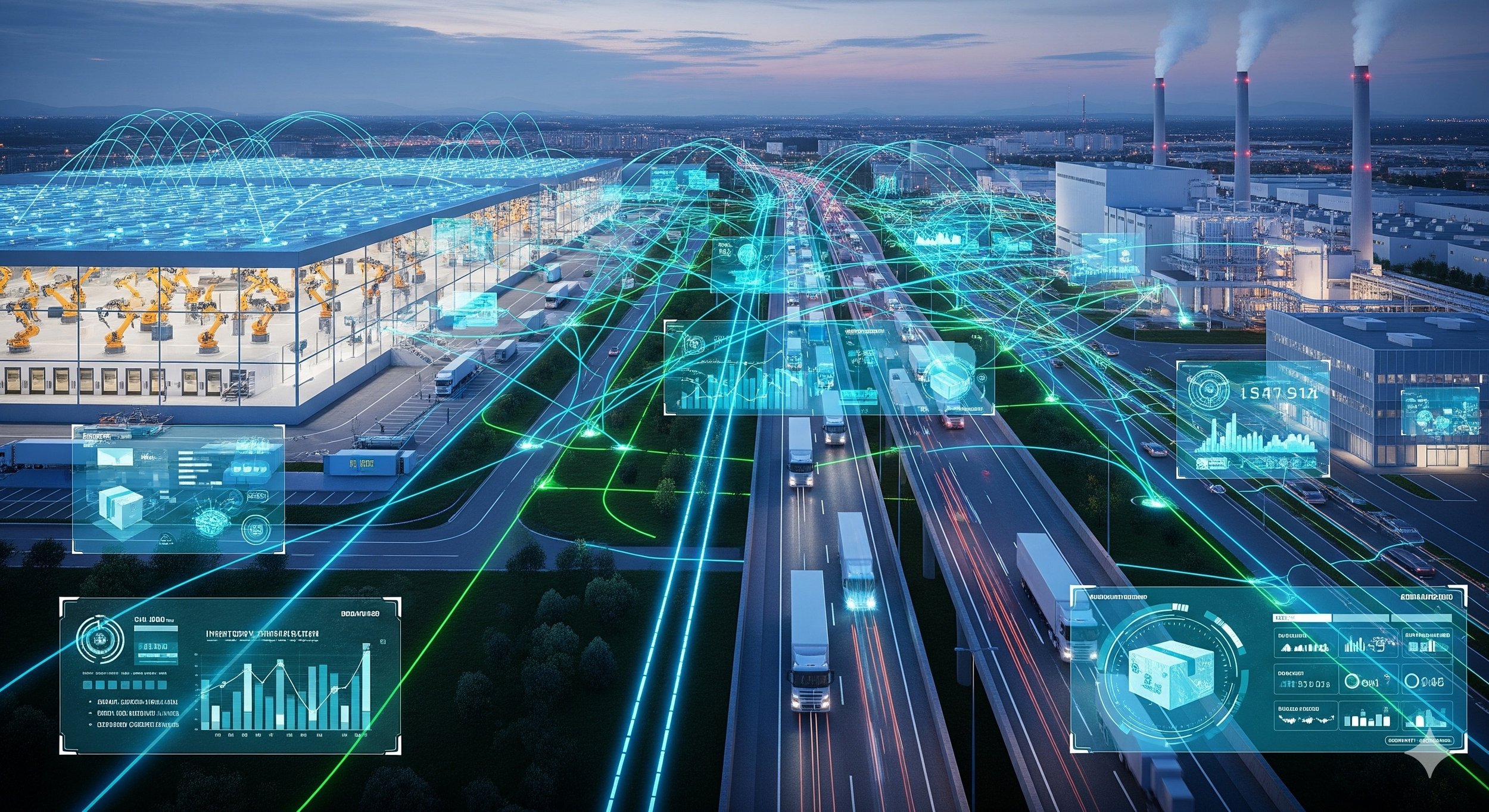
xChangeFlow bridges the data chasm between your internal MES/ERP schedules and external vendor ERPs via real-time data streaming. By mapping transport telematics, customs EDI blocks, and direct supplier capacity variances into a single data fabric, planners get absolute inbound transparency long before materials ever reach the shipping dock.
When a materials anomaly is detected, the engine instantly feeds this data to a localized digital twin. The algorithm dynamically processes hundreds of "what-if" scenarios, evaluating alternative component sourcing routes, factory floor tool reallocation plans, and target fulfillment adjustments to completely insulate active production runs from shock.
Once an optimized execution vector is confirmed, xChangeFlow automatically pushes API actions out to primary carrier systems and pre-vetted fallback vendors. The platform reroutes shipments, reconfigures floor assembly priority maps, and maintains strict customer SLAs completely at machine speed—eliminating human delay barriers.
Stop Managing Disruption. Bypassing It Natively.
Enterprise manufacturing excellence cannot be sustained inside information silos. Attempting to balance rapid assembly changes against material delays using static reports forces your management team into a permanent loop of reactive firefighting. Real-world resilience means establishing a unified, intelligent abstraction layer that links every database node, machine schedule, and tier vendor into a single source of real-time truth. When a component variance hits the network, the data infrastructure responds autonomously to insulate plant floor capacity.
By overlaying xChangeFlow’s event-driven middleware above its existing legacy architecture, an industrial parts manufacturer successfully insulated its main factory lines against erratic materials delays. Within a **60-day operational deployment window**, the system unified cross-silo data across legacy ERP, WMS, and MES platforms. This synchronization achieved an absolute **25% rise in baseline volume throughput**, compressed product exceptions by 18%, and maintained strict delivery targets—entirely avoiding catastrophic line shutdowns and protecting millions in localized margin assets.
The ultimate margin difference in modern production environments is simple: you can let unforeseen material constraints dictate your factory speed, or you can build an automated, real-time data layer that drives immediate structural defense.
Let’s transform your facility framework from fragile to visible. Let’s map out your current tracking blind spots, evaluate multi-platform data integrations, and implement an agile data orchestration layer that secures continuous plant floor velocity—with zero system downtime.
