The Fulfillment Leak: Eliminating Intralogistics Friction Through Real-Time Warehouse Orchestration Layers
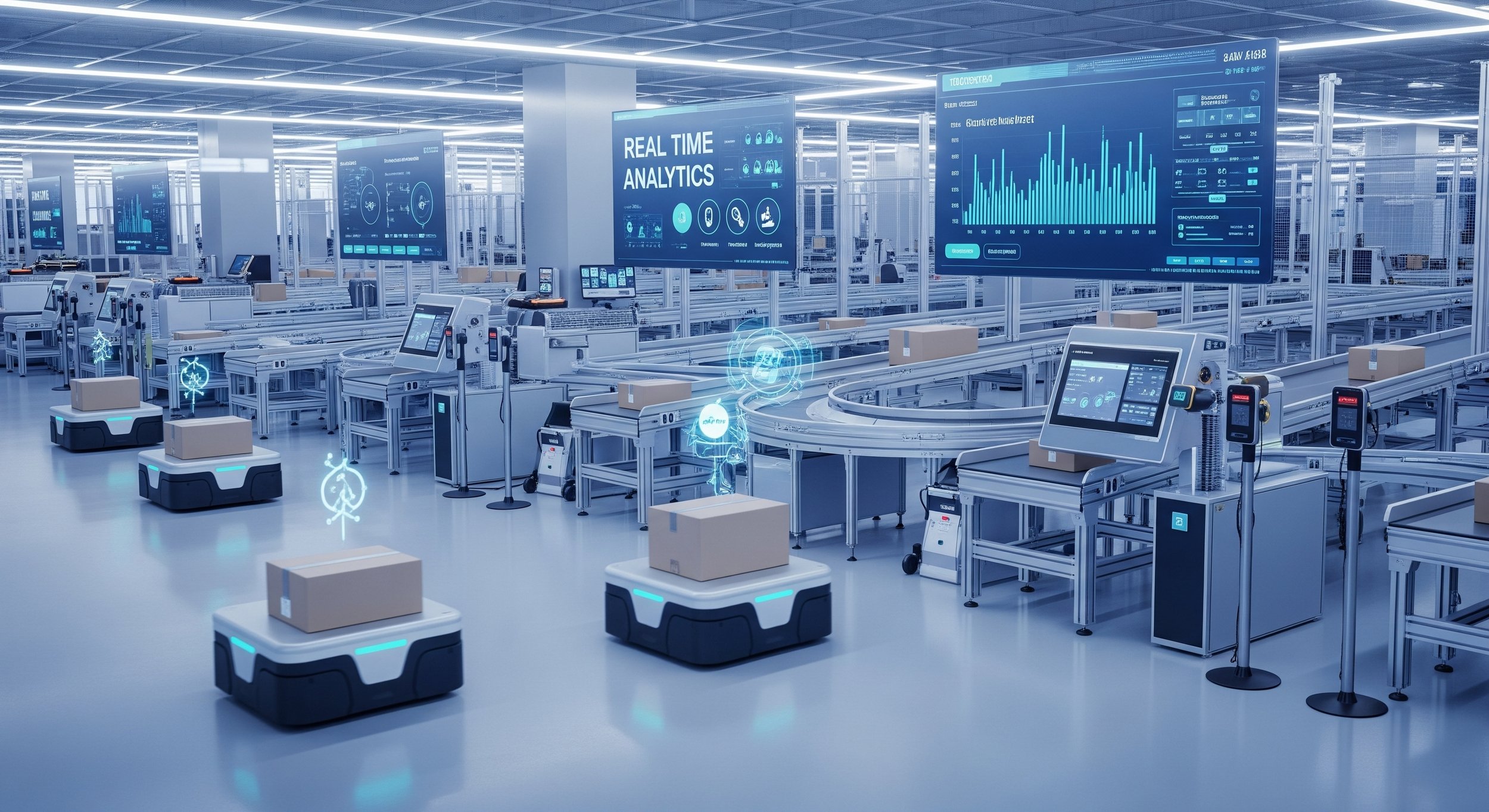
Modern distribution facilities are no longer merely passive nodes for raw inventory storage—they are critical operational engine rooms where enterprise margins are actively preserved or forfeited. Behind every mis-picked SKU, processing lag, or manual data entry step lies an administrative drag that quietly drains capital. Despite this exposure, a staggering **70% of enterprise warehouses continue to run on manual workflows** or fragmented application systems. As operational complexity accelerates, relying on legacy, disjointed workflows transforms your fulfillment network into a severe balance-sheet liability.
The Reality: Structural System Fragmentation Is Holding Capacity Hostage
When core intralogistics platforms remain un-synchronized, localized floor friction quickly compounds into massive, enterprise-wide margin erosion. Manual pick sequences, baseline labeling mistakes, and lagging replenishment protocols introduce severe quality exceptions—averaging an absolute **$39 capital loss for every single mis-picked order line**, an error that standard industry benchmarks trace across 1 out of every 100 manual shipments. Because legacy ERP, WMS, and TMS systems operate on disjointed batch processing cycles rather than continuous, real-time events, 60% of distribution facilities isolate poor platform integration as their single greatest productivity anchor. When these technical gaps collide with a systemic 40% warehouse labor turnover rate, manual operations transform your distribution footprint into an unpredictable financial liability.
The Warehouse Orchestration Pipeline: From Friction to Throughput Velocity
How xChangeFlow layers predictive intelligence across existing databases and material handling assets to drive rapid margin recovery.
xChangeFlow establishes a non-invasive integration layer directly above legacy WMS, ERP, TMS, and physical IoT/robotics configurations. By instantly unifying cross-platform communications, facilities achieve an absolute **25% surge in baseline volume throughput** while eliminating manual database reconciliation delays.
Applying real-time algorithmic decision-making to active fulfillment steps drives an immediate **30% reduction in physical picking errors**. By optimizing travel paths, putaway steps, and replenishment routing, enterprises realize an 18% compression in total warehouse labor costs without altering nominal headcount frames.
Integrating predictive inventory tracking allows the facility to execute high-velocity replenishment. This dynamic synchronization triggers a **20% drop in warehouse carrying costs**, freeing up frozen working capital while protecting service lines against unexpected downstream supply distortions.
Do you know where your warehouse is costing you money?
The Hidden Macro Cost of Delaying Operational Automation
Modern industrial and e-commerce fulfillment overhead costs have surged 20% over recent execution cycles, forcing 79% of operations executives to actively accelerate automated investments. However, achieving elite throughput velocity does not require a highly disruptive, multi-million-dollar physical robotics overhaul. By layering an intelligent, event-driven orchestration layer directly above your legacy core WMS, ERP, and physical material handling nodes, xChangeFlow bypasses rigid "rip-and-replace" strategies to deliver rapid margin recovery.
By deploying xChangeFlow’s event-driven orchestration layer, a prominent regional distribution network successfully automated 50% of its critical core workflows—including physical putaway, material replenishment, and exception handling protocols. Within an aggressive **60-day implementation window**, the hub secured a **31% acceleration in total order processing velocity**, achieved a 23% increase in net fulfillment accuracy, and drove down direct operational labor costs by 18%.
Static, reactive legacy software was never architected to absorb today's volatile demand profiles and erratic labor availability frames. Transitioning away from flat, reactive dashboards toward active, algorithmic decision engines elevates **final order execution accuracy to an absolute 99.9% baseline**, completely stabilizing your fulfillment matrix. In a landscape where 75% of enterprise networks are rapidly scaling their automation capital investments, letting intralogistics fragmentation persist is an unmanageable risk configuration.
With e-commerce fulfillment overhead continuing to mount and ABI Research confirming that 75% of forward-looking operations will fully adopt advanced robotics frameworks by 2027, staying frozen in manual methodologies guarantees competitive regression. Let’s evaluate your existing facility technology stack and isolate high-value automation opportunities to instantly recover your trapped throughput capacity.