The Cognitive Divide: Replacing Sourcing Intuition With Algorithmic Supply Chain Execution

Subjective intuition once dominated multi-tier supply chain decision-making. However, in modern industrial markets, operational disruptions accelerate too rapidly, client fulfillment metrics remain too tight, and macroeconomic trade anomalies are too volatile to rely on human guesswork. This structural reality explains why **75% of enterprise supply chain leaders now favor algorithmic modeling over subjective intuition** for mission-critical execution. Forward-looking technology executives are actively deploying central intelligence layers to transition their networks from reactive crisis containment to predictive operational fluency.
The Reality: The High Cost of Lagging Technical Visibility
Legacy tracking infrastructures are buckling under concurrent structural shocks—ranging from acute marine port congestions and labor shortfalls to unexpected climate constraints and regional conflict vectors. In this highly volatile macro climate, resilience has emerged as a fundamental driver of margin preservation. Without a unified, real-time data layer executing at machine speed, automated optimization models are rendered structurally blind. Lagging, siloed databases remain the primary vulnerability holding back enterprise agility.
The Algorithmic Resilience Pipeline: From Guesswork to Automation
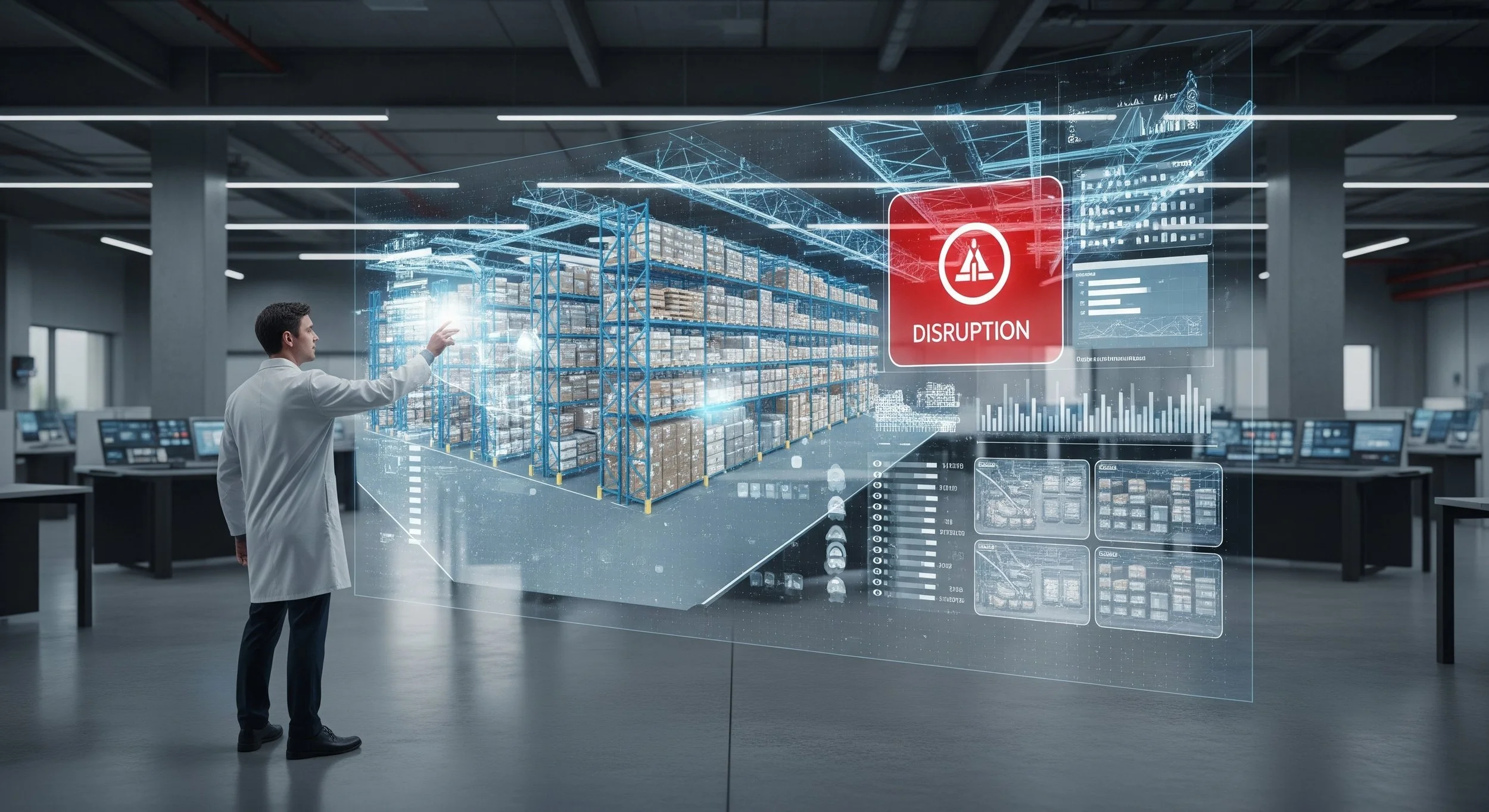
How xChangeFlow ingests live network signals to automate predictive exception handling and insulate production schedules.
Operational intelligence requires continuous, live data feeds. By integrating IoT edge telemetry, transport telematics, vendor API endpoints, and legacy core ERP/WMS databases into a unified execution layer, xChangeFlow eliminates data latency. Machine learning models systematically **compress statistical forecast errors by up to 50%**, immediately driving down overstock liabilities and stabilizing planning cycles.
Once live data layers are secure, automated digital twins simulate continuous "what-if" disruptions across routes and suppliers. Machine learning models flag at-risk materials days before human teams detect a variance. This layer automates smart quality parameters—enabling **82% of enterprise operators to decrease product exceptions by 18%** while preventing downstream manufacturing delays.
Transitioning from reactive firefighting to automated foresight yields immediate balance-sheet results. Early platform adopters achieve an average **15% reduction in total outbound logistics costs** alongside a **35% compression in dormant safety stock levels**, significantly optimizing working capital velocity while driving an institutional 65% optimization in net service fulfillment levels.
Operationalizing the Tech Stack for Algorithmic Scaling
To scale predictive operational resilience, enterprise architectures must adapt to modern data requirements. This requires deploying cloud-native computing fabrics for data processing velocity, creating unified semantic data layers that break traditional database silos, and implementing rigorous MLOps integration frameworks to guarantee model precision during macro shocks.
When predictive optimization layers intercept an upstream geopolitical or logistical risk anomaly, the software triggers immediate alternative execution protocols: running automated inventory simulations, activating secondary pre-mapped sourcing pathways, and rerouting in-transit material freight dynamically. The end result? **A 65% reduction in lost sales opportunities** and total preservation of strict customer SLAs—entirely bypassing human latency bottlenecks.

Technology infrastructure is only half of the solution; enterprise agility requires an algorithmic operational culture. This demands transitioning internal operations from legacy, reactive firefighting to proactive, automated data foresight—supported by cross-functional teams mapped to shared digital metrics and data literacy frameworks.
The next macroeconomic supply chain shock is not an exploratory possibility—it is an impending operational reality. Relying on historical gut instinct inside a highly volatile, distributed trade ecosystem is an unmanageable risk configuration. Let’s benchmark your current operational visibility metrics, isolate tracking blind spots, and establish the technical groundwork for real-time, automated supply chain prediction.
