Break the Silos or Fall Behind: Why Custom Architecture Upgrades Restrict Operational Growth

It is peak quarter execution, and your central order system goes completely dark. Deep inside the IT infrastructure, a single, undocumented point-to-point API script has buckled under an unexpected transaction volume spike. Because your legacy ERP, WMS, and custom fulfillment portals are held together by a fragile web of manual, hard-coded software updates, the failure ripples across your entire network. Planners can't view inventory, warehouses are shipping blind, and your customer service desk is swamped with cancellations. Your engineering team is forced into an emergency midnight huddle, desperately digging through thousands of lines of legacy code to figure out which custom data connection broke.
This is the hidden tax of a fractured software ecosystem. For years, IT teams have built custom code fixes every time they needed two systems to talk to each other. **This fragile integration method traps up to 85% of enterprise IT budgets in maintenance loops**, leaving zero capital for actual operational optimization. When an unexpected trade shock or volume spike hits, this data congestion points can cause a total system breakdown. True operational resilience requires abandoning fragile, custom coding setups and implementing an intelligent, event-driven data pipeline that unifies your entire tech stack into a single, cohesive engine.
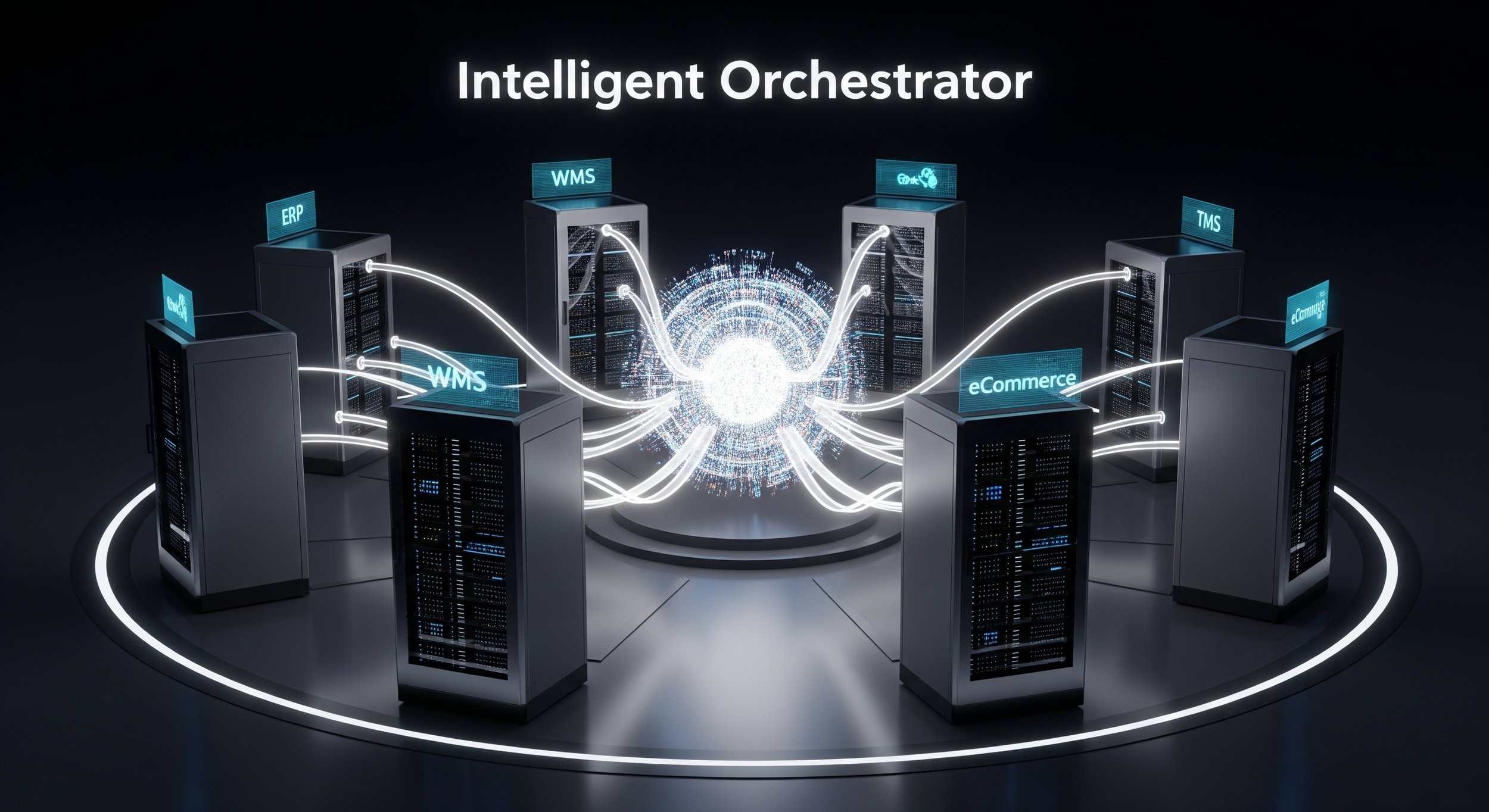
Bypass Custom Coding Backlogs. Orchestrate Natively.
The ultimate problem with relying on custom point-to-point scripts isn’t just that they require constant maintenance—it’s that they leave your data completely blind. When your transactional tables are locked away inside separate databases, your automated forecasting models can't sense sudden shifts, and your logistics coordinators can't protect delivery targets. True operational agility requires an event-driven middleware overlay that gathers, normalizes, and passes transaction updates instantly across endpoints, keeping your entire tech stack perfectly synchronized.
Instead of dumping massive resources into custom point-to-point programming backlogs, modern IT networks use centralized abstraction frameworks to keep software modules connected without data lag.

Faced with massive cross-platform tracking lag, a prominent logistics provider completely re-engineered its framework using xChangeFlow. Instead of building new custom scripts, they deployed a non-invasive semantic overlay above their legacy ERP and WMS databases. Within an aggressive **60-day implementation window**, the network eliminated **85% of its custom engineering backlogs**. This synchronization drove an immediate 20% expansion in net operational capacity, streamlined tracking loops, and protected high-volume targets without any system downtime.
The business difference between fragile architectures and automated enterprises is absolute: you can leave your engineering teams buried in maintenance code, or you can build an agile middleware layer that unblocks your capacity limits.
Let’s cut through the software fragmentation hobbling your development roadmaps. Let’s map your existing technology nodes, evaluate cross-platform data flows, and engineer an agile data orchestration layer that drives clear performance multipliers—with absolutely zero operational disruption.
